Sunday, September 29, 2024

A Sense of Where You Are


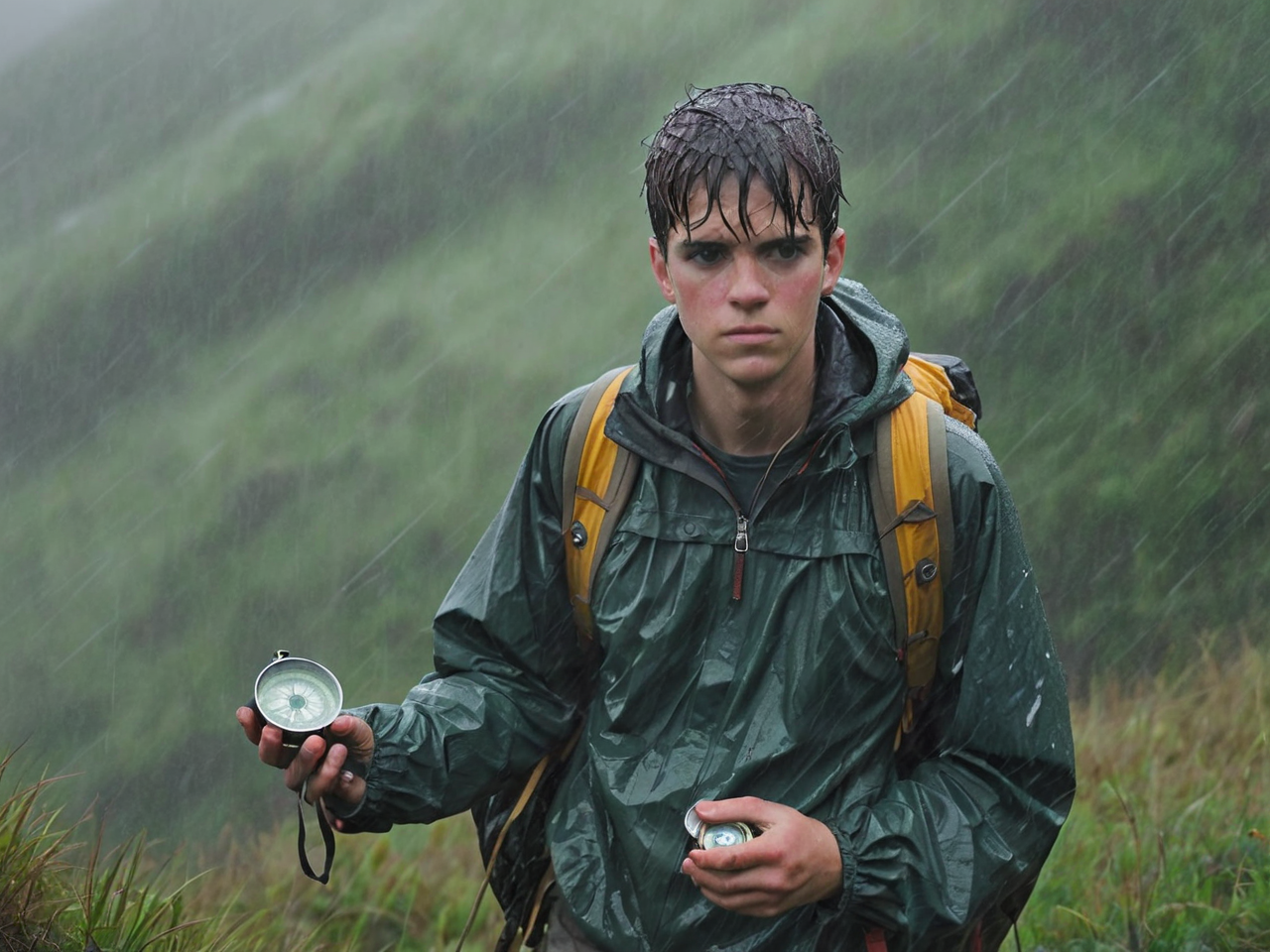
Generated using Gencraft.com

My dad remarried in 1994 not long after my mom passed away following a lengthy battle with cancer. My dad and bonus mom decided it would be fun to send the kids to Disneyland — a chance to get to know each other better, I suppose—while they had their honeymoon a little closer to home.

My dad handed the keys to our family van to his parents, and my five siblings piled in with them. I don’t remember the circumstances why I had to fly to California while the rest of the family drove, but I left the day following the rest of my family’s departure.

I was always a nervous kid and remember my dad emphasizing to his dad the importance of being at the airport when I arrived the following day.

I flew to San Diego where we would stay the night then spend the following day at Sea World before driving north to Anaheim.

My flight was scheduled to arrive in San Diego at around noon. The instruction: I would exit the airport at the appointed terminal where my grandparents and siblings would be waiting for me.

In 1994, the Salt Lake City International airport was nothing like the bustling hub it is today nor were any of the companion restrictions in place that were imposed after 9–11. My parents walked me right to the gate, I hugged them, and got on the plane.

I arrived at the San Diego airport to a scene I’d never witnessed.

People were everywhere!

It took all the maneuvering skills I had learned playing basketball to avoid crashing into people at every turn.

I followed the signs carefully and made my way out of the airport onto the crowded sidewalk. There was no sign of my grandparents or siblings anywhere in the immediate area.

I walked up and down the length of the sidewalk in front of the airport for more than an hour, looking for signs of our maroon-colored van or any familiar face, my anxiety growing with each passing minute. Mind you, this was all before the ubiquity of cell phones so there was no possibility of texting someone or sharing my location.

Ninety minutes in, I tried calling home, collect, from a pay phone but my parents weren’t around to accept the call.

Over the loud speaker, I kept hearing notifications that such and such a person should pick up one of the white courtesy phones and dial a particular number.

After about two hours, I decided to give the courtesy phone a try. The attendant I spoke to was very friendly but indicated there was no way she could ask my grandpa to meet me somewhere for safety reasons. However, they did say they could page him to call a number on the white courtesy phone.

I identified myself as a minor when I spoke to the attendant, so in retrospect it does seem really strange that airport security (pre-TSA) was never involved. I was literally left to my own devices.

Every few minutes, I heard the airport paging system page my grandpa to pick up a white courtesy phone and call the indicated number.

No response.

More than three hours had passed and I was on the verge of panic. Then, at a distance that seemed like miles from where I was (it was probably less than 1,000 feet), I spotted my grandpa. I still remember the muted pastel shirt he was wearing when I saw him.

Giving up concern for bumping into people, I pushed my way through the crowd then practically started screaming his name when I thought I was close enough for him to hear me over the noise of people and cars. I continued pushing and yelling until I finally caught his attention.

Breathless, I reached my grandpa and threw my arms around him. I tried hard not to cry, but the relief I felt was almost overwhelming.

My grandpa was not a great driver, and it turns out he had caused a minor accident during a busy time on a busy road which turned into a long delay getting to the airport.

It was the first time I had ever traveled more than a few miles from home without family or friends. I knew, however, that a carefully-made plan was in place to ensure I would be able to make my way from airplane to grandparents without any issues.

Even though there was an accident, the plan didn’t change. It was just delayed. They arrived, and with an interesting story to tell. Once we were all safely together, my anxiety disappeared (eventually).

We still got to enjoy Sea World and Disneyland, and we still arrived back home to our parents on the appointed day.

“Life is what happens while you’re busy making other plans.” John Lennon gets credit for this though I’m sure the general sentiment predates him — probably back to our hunter/gatherer ancestors.

I can reach back and judge the delay I had as a minor one. However, I’m speaking from 30+ years of experience since that happened. To my 15-year old self, it was a traumatic experience.

In life, some people get really good at navigating the inevitable delays — long and short — while others will always struggle. We all know people (or perhaps are people) who lose patience quickly when something doesn’t go according to plan. I used to be that way all the time, but as I’ve aged I’ve started choosing not to let delays ruffle my feathers (as much).

Some experiences in life are really hard. Some of the inevitable delays come in the form of prolonged health challenges, loss of employment, inability to care for loved ones, or even death.

At fifteen years old, the emotional toll of my experience was significant. Major delays and setbacks in life often come with a high emotional toll. Having a sense of where we are, metaphorically speaking, is the only way to navigate those experiences without allowing ourselves to become the experience.

How we respond to life-altering experiences (both good and bad) comes with, well, experience. After all, experience is what we get when we don’t get what we want.

Looking forward, my fifteen year old self couldn’t know that the experience in San Diego was only a preview of the delays and detours of life, but plans rarely unfold how we want.

When we’re open to the possibility of learning from those “undesirable” experiences, we often end up with the ability to help someone else better navigate similar experiences in their own lives.

Those delays and detours will always be part of life. The question is: what will you do with the ones you encounter?

I have another really funny story from that same Disneyland vacation with my grandparents that I’ll tell another time.

Saturday, September 28, 2024

Take Care Not to Give Too Much for Whistles


Photo by Jakob Braun on Unsplash

Until I was 12 years old or so, my prized possession was a small, stuffed lion that I had for as long as I could remember. When I made my bed in the morning (I really did make my bed most mornings), that little lion would sit proudly on my pillow until night came when I would tuck it into bed with me.

When my older brother and I decided to convert our bunk bed into a trundle-style bed, there wasn’t room for my little lion on the pillow when I pushed my bed under my brother’s for the day. So, I would place him atop the mound of stuffed animals in my “pet net” that hung from the corner of my room. He would watch over the room majestically until I’d pull him down again each night.

That lion was my favorite non-human companion for years, and thinking back on my little lion reminds me of something Benjamin Franklin once wrote. In November of 1779, Franklin shared a story in a letter to a Madame Brillon, which came to be known as The Whistle. In it, Franklin recalled how, when he was seven, he eagerly spent all the money in his pockets to buy a whistle that had caught his ear.

He reported going home, whistling all over the house, but recounted:

My brothers, and sisters, and cousins, understanding the bargain I had made, told me I had given four times as much for it as it was worth; put me in mind what good things I might have bought with the rest of the money; and laughed at me so much for my folly, that I cried with vexation; and the reflection gave me more chagrin than the whistle gave me pleasure.

In his letter to Madame Brillon, Franklin shared that the lesson he learned was “when I was tempted to buy some unnecessary thing, I said to myself, Don’t give too much for the whistle; and I saved my money.”

Most kids don’t think about things in terms of monetary value. Whoever purchased that lion for me probably spent under $5 for it in 1979. $5 today won’t even buy a lousy meal at [insert the fast food restaurant of your choice].

That little lion was a major fixture in my life for more than 12 years. I took the relatively little amount of money someone spent and stretched the value of what it purchased out over more than a decade. While they likely didn’t know it, I would consider that $5 some of the best money they ever spent.

Like Mr. Franklin, eventually I grew up. I don’t remember at what point I stopped sleeping with that careworn lion in my bed. Eventually, he was sent off — along with the rest of my stuffed animals — to the thrift store.

Cherished (and difficult) memories from childhood often serve to define our character as we age, but as we age there’s opportunity for each of us to find those dusty memories that aren’t at our core, clean them off a bit, and learn something valuable from them.

I haven’t thought about that little lion in decades, but apart from the people that surrounded me in my earliest years, that lion was something I loved like a dear friend.

From his whistle experience, Benjamin Franklin made the observation that, in life, far too many of us give “too much for the whistle,” whatever that whistle might represent in our lives.

The parting thought in recounting his story is this:

In short, I conceive that great part of the miseries of mankind are brought upon them by the false estimates they have made of the value of things, and by their giving too much for their whistles.

Franklin’s lesson is a valuable one that raises the question, how many of us pay too much for our own whistles. We exhaust ourselves in the pursuit of status, stuff, and social validation, investing far more than what things are truly worth. Sometimes, it takes years for the reflection to sink in to realize just how much we’ve sacrificed for things that, in the end, don’t bring much lasting joy.

Of course, hindsight brings the clarity we don’t enjoy in the moment and helps us see the things we might have overvalued.

Look, Franklin’s lesson isn’t just about misplacing our priorities or spending too much money on purchases — it’s about understanding what really matters to us. My stuffed lion had little monetary value when it was purchased and far less when I donated it to goodwill, but the intrinsic value is incalculable.

It begs asking ourselves the question, Are the whistles I’m chasing today worth the cost?

Sunday, September 22, 2024

Will Your Losses Lead to Your Triumphs?


Photo by Giu Vicente on Unsplash

I didn’t know what I would find when I put my earphones in and turned on Livingston’s “A Hometown Odyssey” album. My youngest and I regularly jam out to Shadow from that album, but until yesterday, I was ignorant to the fact that there’s an entire album that goes along with it.

The album opens and closes with narration done by J.K. Simmons. While the lyrics of almost the entire album were surprisingly resonant, it was the closing narration (“Godspeed”) that really caught my attention. More on that in a moment.

My youngest son likes basketball. He plays with a recreation league where there’s no opportunity to assess skill level before the teams are formed. Sometimes, the matchups are even. Sometimes, they’re a disaster.

Yesterday, my son’s team got completely dominated by the other team. At one point, I’m fairly certain the star player on the opposing team had to go shave his beard during halftime to continue convincing the refs he was only 9 or 10. The score at halftime was 2 to 27. 21 of the 27 points were scored by the bearded kid.

Our little team was so discouraged at halftime. One little girl even ran over to her dad to cry on his shoulder because of how badly they were losing. It seemed apparent they weren’t having any fun.

That game was a microcosm of what life’s like sometimes. We experience tremendous disappointments and exhilarating victories. There are also long periods of time when we mostly just exist.

Often, there are extended periods of time when losses seem to be heaped up, one after the other: a cancer diagnosis followed by job loss followed by the death of a loved one, and on. Even in my small circles, I’ve seen people suffer so much that I’ve wept for them.

Our capacity to endure is perhaps one of the most defining characteristics of humanity. I watched a video yesterday of a woman born with no legs and only one arm navigate her way around a market on a skateboard, using a sandal and her only hand to move among the crowd with a smile on her face.

How?

I bemoan my existence when I have a rough day at work or catch the flu.

There are a few keys to enduring the difficulties, trials, and losses of life well.

  1. Gratitude.
  2. A positive attitude.
  3. Perseverance.
  4. Perspective.
  5. The love and support of others.

Of course, I’m not advocating false gratitude, toxic positivity, or surrounding ourselves with people who pity us. Even during times when life is generally good, we can have down days. Exercising the four traits above and relying on those around us is a way to ensure that the down days don’t win.

Orson F. Whitney wrote:

No pain that we suffer, no trial that we experience is wasted. It ministers to our education, to the development of such qualities as patience, faith, fortitude and humility. All that we suffer and all that we endure, especially when we endure it patiently, builds up our characters, purifies our hearts, expands our souls, and makes us more tender and charitable.

Gratitude is so important because it helps us focus on what we have (and rarely does that include our tangible assets) and the lessons we’ve learned. That holds true even when we’ve lost so much.

A positive attitude allows us to see the potential that can come from adversity which can also open doors to new opportunities.

Perseverance is this unique human characteristic that allows us to manufacture within ourselves the strength to keep going when giving up seems easier. This is what allows us to overcome challenges.

Perspective, like a positive attitude, reminds us that losses — even the most painful ones — are often temporary. Perspective helps us remember what’s most important.

The last point is especially important when we’re supporting someone else. Sometimes, our role is to mourn because others are mourning. Sometimes, it’s to provide comfort. Rarely is it to offer advice because that advice is often a mechanism to lessen the discomfort we feel because of what others are enduring.

I’ve heard a story of an elderly man going to visit a dying friend. The elderly man was accompanied by his son. The man walked into the room of his friend, sat down beside his bed, and held the man’s hand. After some period of time, and very few words, the elderly man stood, kissed his friend on the forehead, and returned to the room where his son was waiting.

“It was a good visit,” the elderly man reported to his son.

“But Dad,” the son said, somewhat perplexed, “you barely said anything.”

“That’s because we didn’t need words.”

No advice. No words. Just presence.

During halftime, our kids made their way to the bench with their heads hanging down, practically dragging their feet, overwhelmed by the odds stacked against them. Life has a way of testing us in ways that often seem overwhelming; odds impossibly stacked against us. Like our little team — down by 25 points at the half — they had the choice to either give up or dig deep. Sometimes, the triumph isn’t about changing the outcome, it’s about refusing to let the defeat become who we are.

I didn’t hear what our team’s coach said to them during the few minutes they had to rest at halftime. But, when the teams took to the floor again, something had changed in our little squad.

Surprisingly, only 6 points were scored during the entire second half, and they were all made by my son’s team (same kid, all 8 points they mustered during the entire game).

Final score: 8 to 27.

There was an air of triumph from our team, knowing they had held the other team scoreless during the entire second half. They lost badly, but the discouragement they felt at halftime was erased by the fact that they’d won the second half.

Who we become in the metaphorical second half isn’t about the victory. It’s about what we learn through endurance, hope, and resilience. That’s often enough.

The closing track of “A Hometown Odyssey” is a stirring narration:

What keeps you up at night: the fear of the unknown or the fear of being normal?

Rest assured. You are far from it. Your losses will forever lead to your triumphs. The evil that meets you at every corner only proves you have the power to change. The darkness will always flee from your light, and the world awaits the stories you have left to tell.

Friday, September 20, 2024

Oh No! I Am Where I Used to Be


Image drawn (mostly) by ChatGPT. I literally grew old attempting this.

A month ago, my wife and I literally shook hands when we made a bet who could reach their target healthy weight first. Years ago, I entered into a competition with myself to lose some weight. Over the last year, I’ve allowed the pounds to creep back on.

My doctor tells me I’m healthy. I can still run 10+ miles at a time. However, lugging 25 extra pounds around when covering that many miles isn’t for the faint of heart. I sweat more. I have to work harder. I generally don’t feel as good.

The logical decision: change my diet because by the time you reach middle age it’s impossible to outrun a bad diet.

I just got home from a 3-day business trip. On that trip, I drank an incredibly unhealthy amount of soda, and I ate two huge meals, a couple of smaller ones, five donuts, two softball-size muffins, two Bobos, and about 15 pieces of Red Vines licorice.

Oh, and a protein bar.

Now wait! Wasn’t I just talking about entering into a contest with my wife to get back to a healthy weight?

Donuts + muffins + Bobos + Licorice + Soda ≠ A Healthy Diet¹


Here’s a reality for most of us. We don’t all have the discipline of Ashprihanal Aalto who ran the Sri Chinmoy Self-Transcendence 3,100 Mile Race in 40 days, 9 hours, 6 minutes, and 21 seconds. I know you’re wondering: that’s almost 77 miles every day for 40 consecutive days. (I once ran 1,400 miles in an entire year.)

It’s almost a given that at times and seasons in our lives, our self-discipline will wax and wane. 

Look. I’m not a doctor nor did I ever play one on TV, so take what I say with a grain of salt. It seems there’s not one body type that epitomizes health. Generally, however, it’s a safe bet that unless you have a chronic ailment of some kind, walking up a flight of stairs should not leave you winded.

Now, this article is introspection that I’ve chosen to let out. If it resonates, that’s great. If not, feel free ignore my introspective advice.

Even though I’ve backslid on the agreement I made with my wife, that doesn’t mean I need to give up, succumbing to some imaginary inevitability that I’m somehow beyond change.

There’s one thing humans excel at, and it’s the reason anthropology believes we’ve come this far: there are few species better at adapting than we are.

Change is constant in our lives. This week, I partook of the DoMuBoLiSo diet. Next week, I may have a protein bar each morning and run 10 miles a day.

The point is, when we backslide, we don’t have to stay where we are (or continue backsliding). We can progress.

It’s never too late to hit reset. I might have single-handedly kept Krispy Kreme in business this week, but that doesn’t mean I’m stuck on this path. I made a bet with my wife, and I can recommit to the process today, right now. The beauty of life is that it gives us so many chances to get back up and try again, no matter how many donuts we eat.

So, whether you’ve chosen to follow in Ashprihanal’s footsteps (literally) or are just trying to take the stairs without sucking air like a Nascar engine, it’s all part of the same journey. The key is to keep moving forward. When you slip back into old (bad?) habits, just start moving forward again. Some days will be great, other days you’ll indulge in too many muffins and licorice. What’s important is not letting the slips define you. Instead, let them add to your determination to do a little better tomorrow.


¹My sincerest apologies to the gurus peddling the DoMuBoLiSo Diet. It doesn’t work. Sorry!

Wednesday, September 18, 2024

Sometimes, You Watch the Movie


Photo by Adrian Swancar on Unsplash

I have more to do than I can possibly do in the time available to me.

A big part of that problem is being a “yes man.” I derive a lot of personal satisfaction and self-worth from helping other people solve their problems. It’s part of why I studied engineering in school. It’s part of why I help companies apply for grants, and why I write software.

Even as I write this short missive, I’m responding to text messages, prepping for a meeting, and jotting down some ideas as they come to me.

Can you say, “major focus issues?”

I have a desire to be so productive that it often becomes counterproductive. Daily, often minute-by-minute, I jump from one thing to the next. It’s been a bad habit 24 years in the making.

The solution?

Watch a movie.

Alright, that’s not a great solution (most of the time). However, life can’t always be about getting stuff done. Sometimes, you do have to relax. Sometimes, you have to give you brain permission to do something other than try to solve your own or other people’s problems. Sometimes, you do the thing that, on the surface, doesn’t make the most sense because it actually does make the most sense.

For example, with all I have to do most days, it would make the most sense for me to roll out of bed and straight into my office chair where my fingers would fly over the keyboard for hours on end writing poetic code, responding to emails with perfect grammar and brevity, and helping every helpless soul who walks through my office door conquer the metaphorical alligators chomping at their ankles.

Except that it doesn’t make the most sense. It makes sense, instead, for me to roll out of bed, have a quick protein bar, and go for a run. It’s a simple way for me to ensure I can better manage the anxiety that is with me from the time my eyes pop open (often before 4:00 am) until I collapse in bed sometimes 20 hours later.*

We all need things that equate to giving ourselves permission to watch a movie.

  • Maybe it’s simply setting a timer for a short 10 to 15 minute break where you can listen to music, doodle in a notebook, go on a walk, or just breathe. Those short breaks can serve as a kind of mental reset to make you more productive.
  • Like talking a walk, perhaps the mental preparation comes with a little more rigorous movement; engaging in something that requires significant physical effort. Even brief bursts of effort can wake up the mind and improve mood and productivity.
  • Some people are fond of meditation. If that’s not your jam, perhaps taking a few moments (as suggested above) to just breathe. Four or five feel-your-belly expand breaths are all that’s needed to calm the nerves and increase focus.

We can’t make progress on a particular task without putting effort into it, but the counterintuitive truth is that sometimes walking away for a moment can increase the likelihood that you’ll be able to finish the task.

It’s okay to allow yourself time to recharge. Really.

Go watch a movie.

*Yes, and I know that it makes even more sense to fix my sleep. Yes, I know that sleeping better will lessen my anxiety. I’m working on it.